
Pelvic Floor Therapy
Pelvic floor neuromuscular stimulation is a noninvasive, FDA cleared treatment for mild to moderate stress incontinence, urge incontinence, or mixed incontinence The therapy is designed to improve activation and support of the pelvic floor muscles. Treatment uses external electromagnetic stimulation to help the muscles contract and relax more effectively, which can assist individuals who have difficulty engaging these muscles on their own. Sessions are performed fully clothed and do not involve internal examination or internal devices.
About Pelvic Floor Neuromuscular Stimulation
Technology Background
High‑intensity focused electromagnetic (HIFEM) technology is widely used in the cosmetic field as a noninvasive muscle‑building modality. In 2018, the same underlying technology was also adapted for pelvic floor neuromuscular stimulation and received FDA clearance for the treatment of stress and urge urinary incontinence.
How Pelvic Floor HIFEM Works
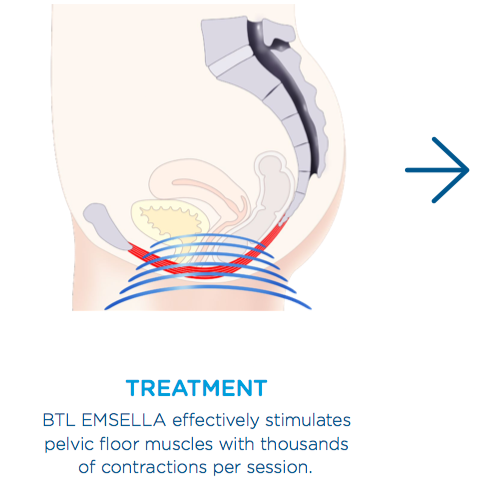
Pelvic floor HIFEM induces strong, involuntary muscle contractions that are not achievable through voluntary effort alone. These supramaximal contractions help reeducate the pelvic floor to contract more effectively and improve neuromuscular engagement. Over a series of sessions, the muscles learn to activate more consistently during daily activities.
What Treatment Feels Like
Treatment is fully external and does not require undressing. You sit on a specialized treatment seat while electromagnetic pulses stimulate the pelvic floor muscles. Most individuals feel a combination of tingling and rhythmic contractions. The sensation is unusual but not painful, and each session lasts approximately 30 minutes.
Why Pelvic Floor Activation Matters
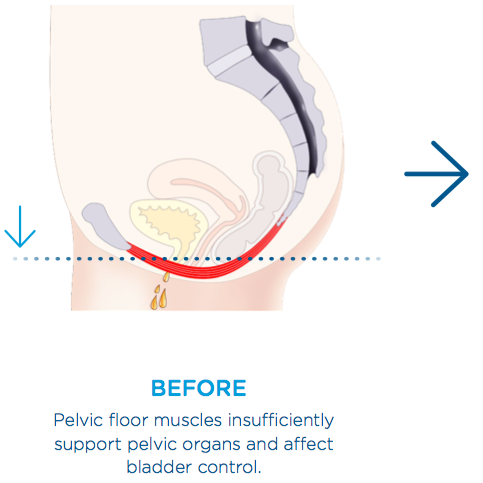
The pelvic floor plays a key role in supporting pelvic organs and maintaining normal function during daily activities. When these muscles are underactive, individuals may experience difficulty maintaining consistent support. When the organs are not supported, you may have problems controlling the release of urine. Improving neuromuscular activation helps the pelvic floor contract more effectively and respond more reliably during movement and physical stress.

Treatment Frequency and Protocol
A typical course of pelvic floor HIFEM therapy consists of 6 sessions over 3 weeks. Many individuals notice improved muscle engagement early in the process, though responses vary. Periodic maintenance sessions may be recommended to support long‑term neuromuscular activation, depending on individual goals and needs.
Research and Published Results
Published clinical studies on pelvic floor HIFEM have reported reductions in pad usage, including one study showing an average 75 percent decrease and 95% increase in quality of life. These findings reflect study populations and protocols; individual results vary.
Pelvic floor neuromuscular stimulation is offered as a series of sessions, with pricing based on the full treatment course. This service is not covered by insurance, but is not excluded from health savings account funds. For current pricing and scheduling availability, please contact our office.
Testimonials
I have received 6 magnetic muscle stimulation treatments for pelvic floor strengthening. This treatment was recommended by Dr. Starns for bladder stress and urge incontinence. After the initial treatment of 30 minutes, I could tell a change in the ability to hold my urine. I feel an overall 80-85% improvement with urge incontinence (making it to the bathroom without leakage). I have also seen a 75% improvement with stress incontinence when sneezing, laughing, or being startled.
Sue D.